Kansas case file

The family at the edge of the Osage Trail.

A source-backed guide to the Bloody Benders, the Labette County case, and how the horror western graphic novel adapts the legend.

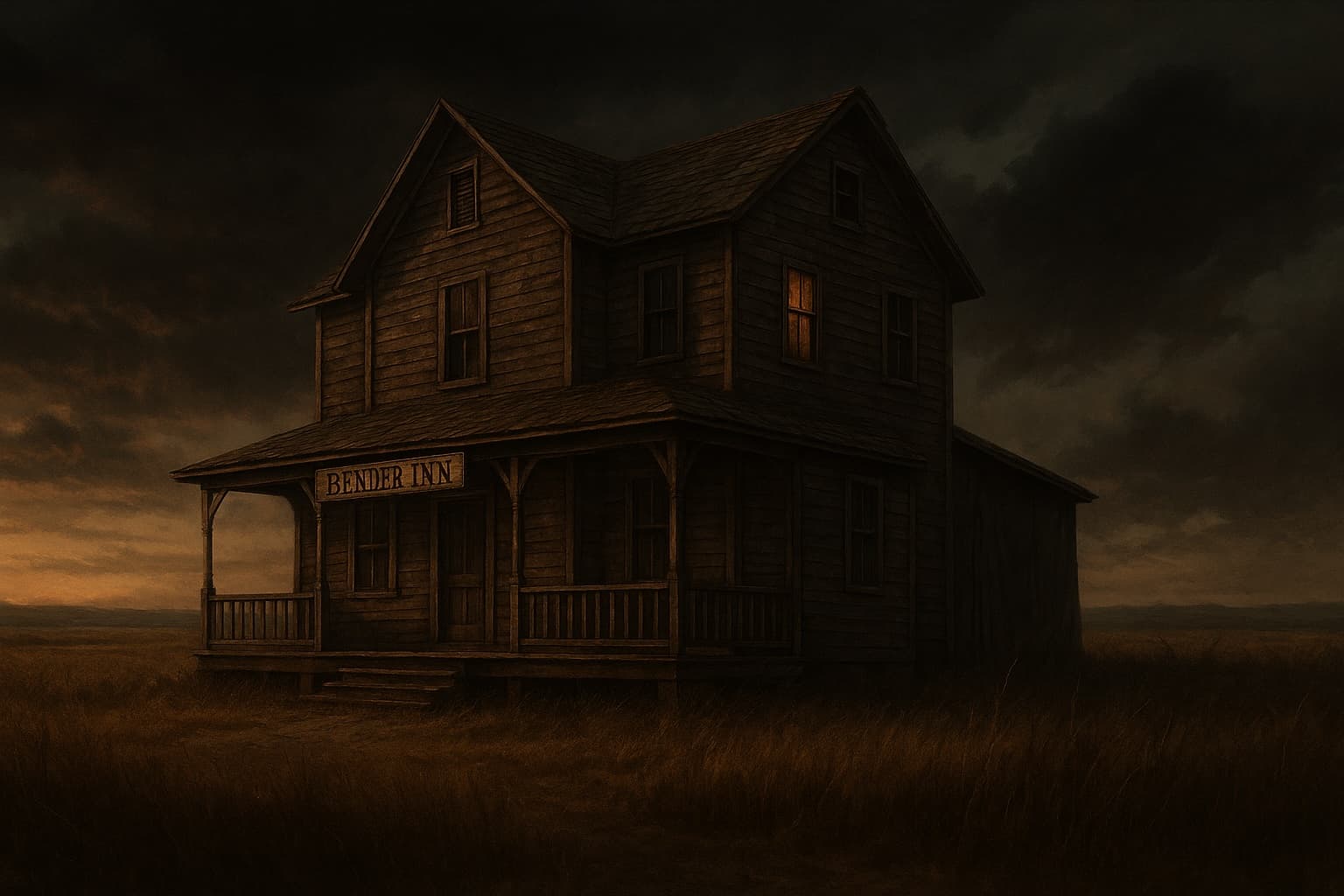
A dark frontier inn on the Kansas prairie

Direct answer

The Bloody Benders were an alleged family of innkeepers in Labette County, Kansas, linked to the disappearance and murder of travelers in the early 1870s. Their crimes were exposed in May 1873 after Dr. William York vanished and investigators searched the abandoned homestead. Their final fate remains unconfirmed.

PlaceLabette County, Kansas, near Cherryvale and the Osage Mission Trail
Case windowEarly 1870s, with public discovery in May 1873
Known catalystThe search for Dr. William York after he disappeared along the trail
Enduring mysteryThe Bender family's fate was never conclusively established

What is documented

Contemporary newspaper accounts, later summaries, and modern historical writing agree on the broad outline: travelers vanished, the Bender homestead was found abandoned, bodies were discovered on the property, and the family was gone before capture. Details about names, origins, motives, and fate vary across sources.

Why the case still works as horror

The Bender story turns hospitality into threat. The place that should offer food, rest, and witness becomes a private mechanism. That reversal is the center of the graphic novel: the open road promises freedom, while the inn reduces every visitor to a calculation.

How the adaptation uses the legend

The site treats the Benders as both historical subject and fictional engine. Historical references guide the setting and public case file; the graphic novel and journal entries create interior scenes that no historical record can verify.

AEO

Questions readers ask

Were the Bloody Benders real?

Yes. The Benders are tied to a real 1870s Kansas murder case, though many details were shaped by newspaper sensationalism, folklore, and later retellings.

How many people did the Bloody Benders kill?

Sources vary. KU Alumni summarizes the family as robbing and murdering at least 11 patrons, while the Library of Congress article notes that 1873 reports attributed up to fourteen deaths to them.

Were the Bloody Benders ever caught?

Their confirmed fate remains unresolved. Multiple later arrests and rumors were reported, but the family was never conclusively identified and convicted for the Labette County crimes.

Sources

Research trail

These references support the public historical frame. The Kate journal entries and dramatized scenes remain fiction.